Agrivoltaics and Land Optimisation in Solar Power Projects

5th Jun, 2025

Synopsis

This blog investigates the potential of agrivoltaics and dual-use land approaches to boost solar energy production in India. The blog explores agrivoltaics as a method to optimize land use by allowing agricultural and solar-panel coexistence which benefits both farmers and developers. The article demonstrates how floating solar plants resolve land conflicts while safeguarding water resources and reducing module temperatures. The article explains how solar power installations on waterways and non-farmable areas enable capacity expansion through minimal land usage. The blog examines solar-cell array development across various landscapes to evaluate technical and environmental factors in solar-plant design. The article discusses economic and logistical considerations for dual-use solar project expansion through irrigation-system integration and farming-cycle synchronization. The blog conducts a detailed evaluation of how land-optimization techniques accelerate solar-power infrastructure development without compromising food production.

Land Constraints and India’s Solar Ambition

The Indian government has set a goal to reach 300 GW of new solar capacity by 2030 but the available suitable land is limited and frequently disputed. The installation of conventional ground-mount plants faces opposition from farming activities and biodiversity conservation and residential areas. The dual-purpose approach of Agrivoltaics and floating solar plants enables the combination of energy production with existing land and water resources thus transforming land-use conflicts into beneficial partnerships. The dual-use strategy enables the nation to achieve its capacity targets while protecting food security and rural employment which creates opportunities for an expanded solar power project development pipeline.

Agrivoltaics: Concept and Land-Use Efficiency

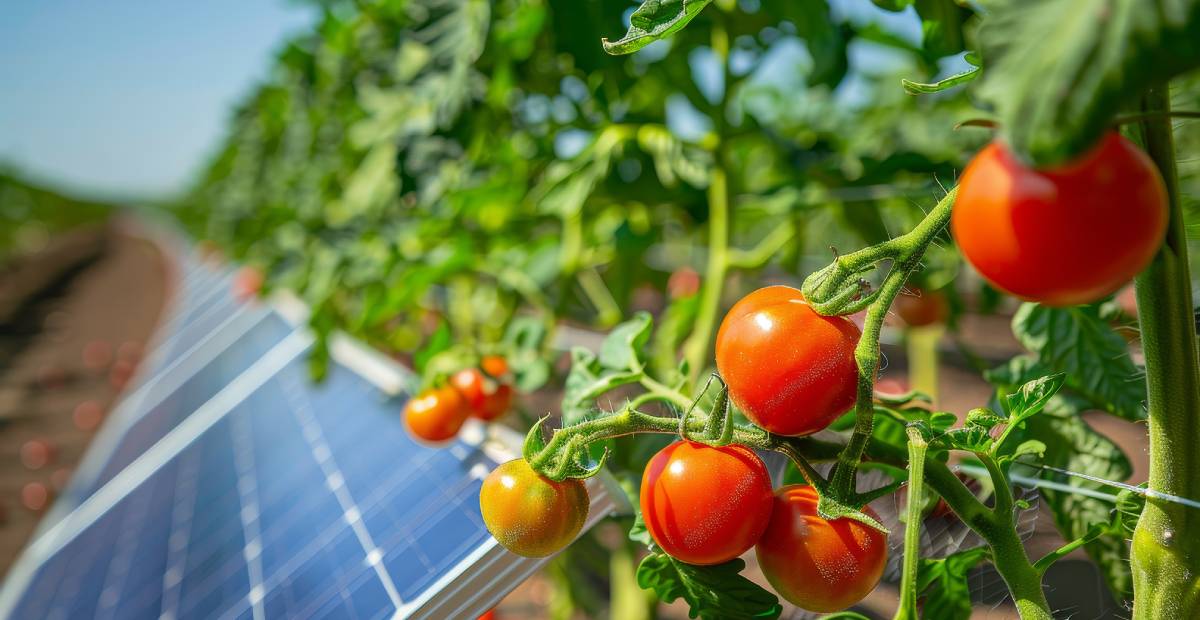
The installation of photovoltaic (PV) tables at two-to-three meters above crops enables sunlight to be distributed between agricultural land and solar panels. Research indicates that land-equivalent ratios (LER) range between 1.4 and 1.7 which means one hectare of combined farm and solar land functions as 1.4 to 1.7 separate hectares.* The combination of partial shade with solar panel operation leads to a 15% increase in tomato yields and a 2 °C temperature reduction which enhances efficiency.* The advantages of agrivoltaics position it as an ideal solution for states with dense population where the farmland cannot just be used exclusively for energy.

Field Evidence: Agrivoltaic Pilots in India

Pilot projects in Maharashtra, Tamil Nadu, and Gujarat grow chillies, turmeric, and fodder beneath 3 MW solar arrays. A 2023 Maharashtra pilot generated 4.9 GWh annually while farmers saw a 10 % increase in seasonal income. 

The demonstrations show that evapotranspiration decreases and irrigation requirements decrease which is essential for areas that experience drought. The developers receive quick land approval and farmers obtain both lease payments and crop revenue which makes a strong argument to expand these projects using solar power plant models.

Floating Solar Plants: Tapping Water Surfaces

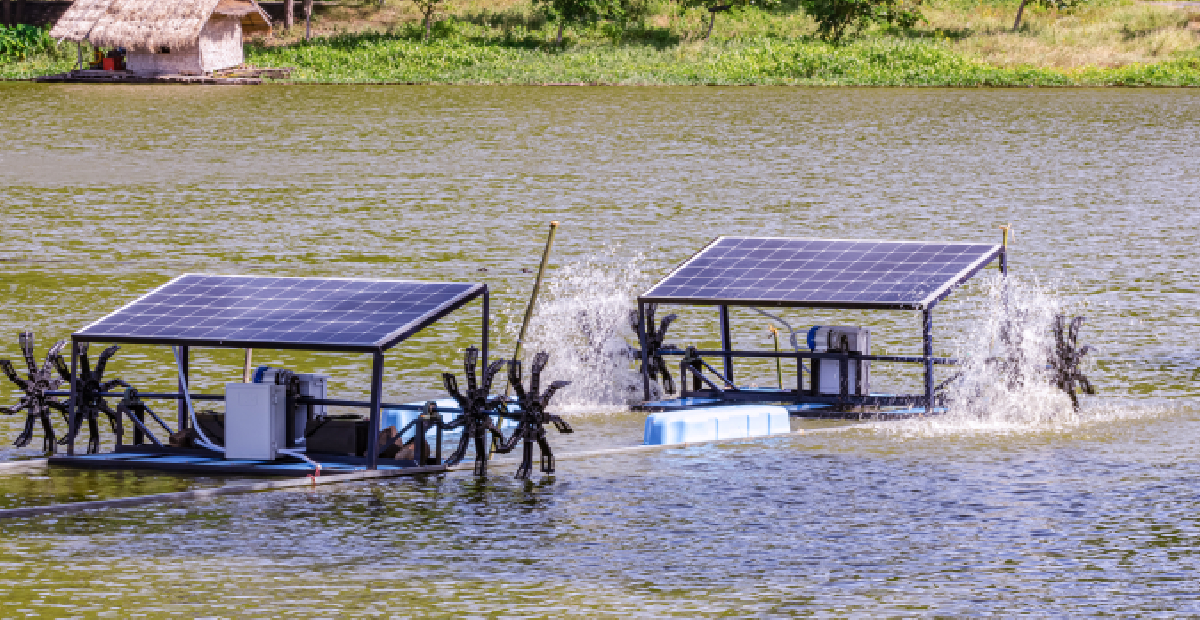
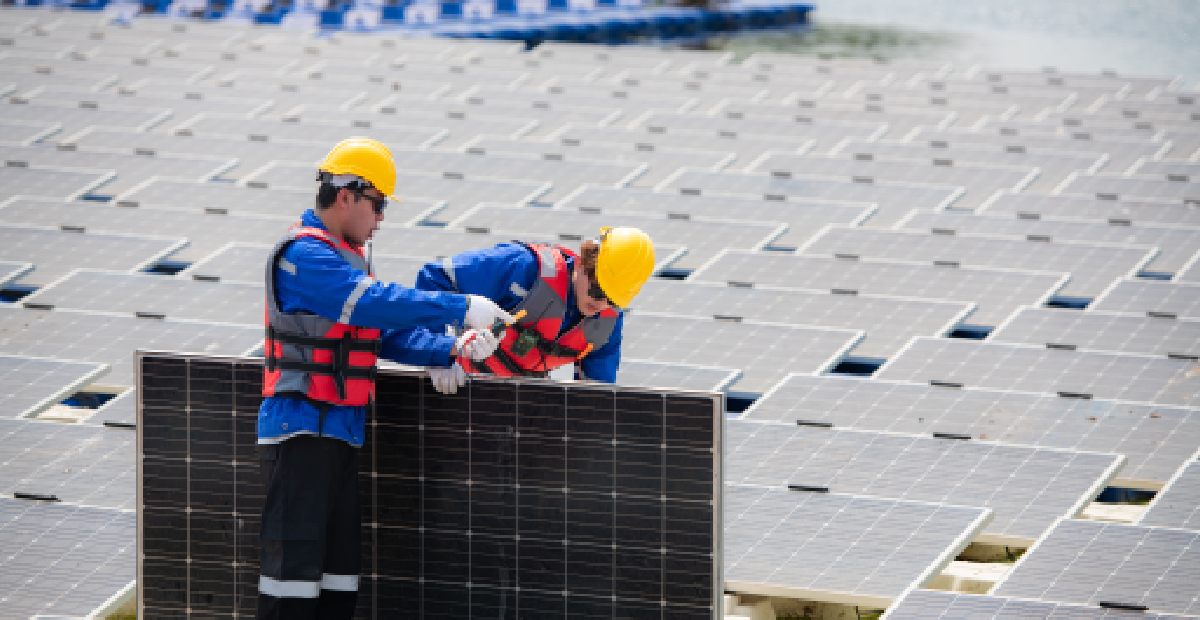
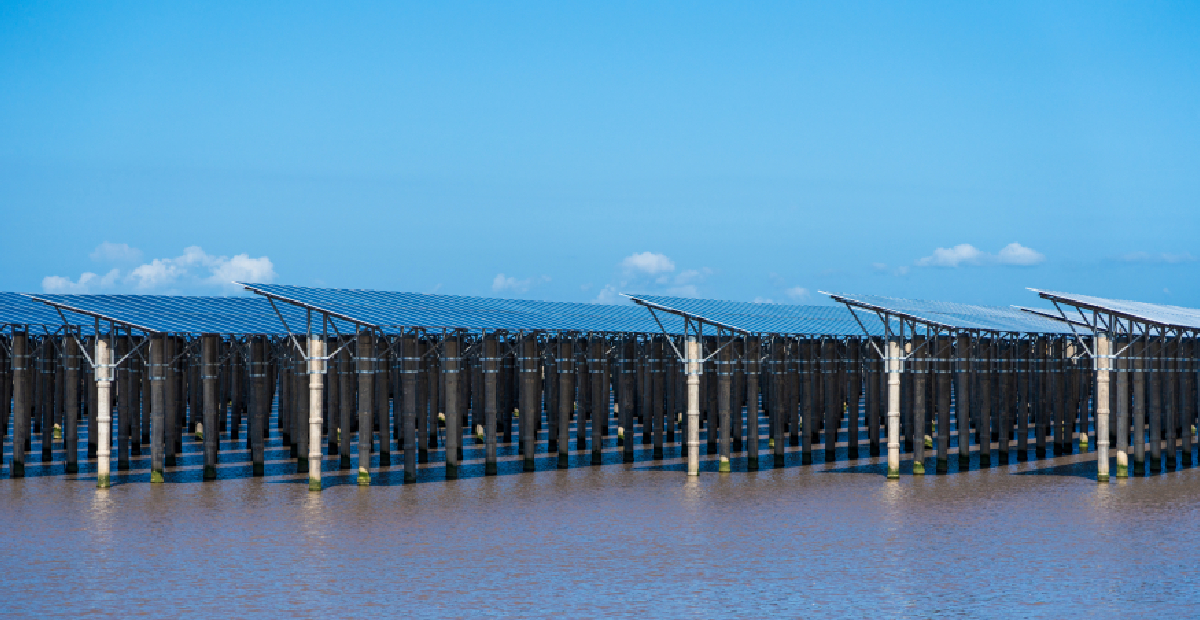
Large reservoirs and ponds present vast “blue acres”. The 100 MW floating solar power facility at Ramagundam in Telangana operates as India’s current floating solar power facility, while 90 MW of a 600 MW unit at Omkareshwar dam has been commissioned. The implementation of water cooling technology results in a 3–5 % increase in power generation and installing this technology on 10 % of major reservoirs would produce 30 GW of power. Standard PV hardware installed on anchored pontoons keeps the cost of solar energy plants at 15 % above ground-mount levels while eliminating the need for land acquisition procedures.

Canal-Top and Non-Arable Solar Power Projects

The 1 MW pilot project installed photovoltaic panels on top of the Narmada canal to establish canal-top PV as a pioneering technology. The new tender proposals include 2200 MW of power generation capacity across branch canals which would stop 80 billion liters of water from evaporating annually. The combination of rocky scrublands and mine-spoils serves as locations for concentrated solar power projects and fixed-tilt PV systems which do not require agricultural land displacement. These examples underline how creative siting unlocks land-neutral megawatts, accelerating national roll-outs of every solar power project category.

Design & Environmental Considerations across Terrains

The installation of PV systems above crops needs elevated racking systems and adjustable tilt mechanisms and wider row spacing but floating solar plant arrays need corrosion-resistant pontoons and mooring analysis. Environmental assessments need to include models for soil compaction as well as glare effects and water-quality impacts. Engineering teams assess snow-load and wind forces and hydrodynamic forces to develop optimal solar cell array construction methods that work with local ecosystems. BIS standards together with international IEC codes ensure both generation and agronomic results remain safe.

Economics: From Solar Energy Plant Cost to Farm Income

The initial cost of solar energy plants increases by 5–10 % when using agrivoltaic steel yet this increase is compensated by generating two revenue streams from electricity sales and agricultural production. The Levelised Cost of Electricity (LCOE) decreases when state tariff concessions and priority grid evacuation are applied. The combination of land rental payments and increased yields from shade-tolerant crops (spinach, turmeric) benefits farmers while developers obtain extended leases at prices below industrial land rates. A typical 2 MW solar power project delivers 17–19 % IRR when dual-use gains are monetised.

Scaling Dual-Use: Policy, Logistics, and Irrigation Links

The mainstream adoption of agrivoltaics depends on clear policies regarding dual land classification and property tax breaks and agro-solar purchase obligations. The implementation of modular trackers allows machinery to pass under panels and drip-line layouts that match panel stanchions. The resource loop becomes self-sustaining when PV arrays power irrigation pumps that operate in the cool microclimates created by crops which provide power to the panels. The integration of drones and IoT sensors allows torque adjustments based on seasons without requiring human intervention.

SunShell Power: Dual-Use Expertise for Land-Smart Projects

SunShell Power develops agrivoltaics and floating solar plant solutions which optimize both yield and power generation. Our engineering teams model shading ratios, crop canopies, and structural loads to achieve balanced LER targets. SunShell uses its EPC capabilities to handle permitting and anchoring and farm-cycle synchronization which speeds up the delivery of land-optimized solar power projects from concept to commissioning.

SunShell’s Value Proposition to Investors and Farmers

SunShell combines agronomic consultancy with PV design and financing packages to transform idle ponds and farmlands into revenue-generating assets. Our turnkey approach lowers solar energy plant cost, ensures compliance with agricultural guidelines, and unlocks premium green-finance channels earmarked for integrated land-use solutions. Clients gain resilient energy, diversified farm income, and demonstrable ESG impact—establishing SunShell as a strategic partner for every land-smart project on solar power plant.

FAQs

Agrivoltaics combines solar panels and agriculture on the same land, enabling food and energy co-production—a critical strategy where arable land is scarce.

Floating arrays avoid land acquisition, benefit from water-cooling, and reduce evaporation, but require specialised anchoring and slightly higher capex.

Yes, CSP mirrors over canals or non-arable terrain can supply thermal storage while preserving farmland.

Elevated racking, structural steel, and tailored O&M add cost, but dual revenue streams and tax incentives improve overall IRR.

SunShell conducts crop-shade modelling, selects compatible species, and times installation around sowing cycles to safeguard yields.

You might also like
Diagram showing the assembly layers in pv panel construction
15th Jan, 2026
The scientific genesis of a solar power plant from the construction of a solar cell

Synopsis The worldwide energy transformation depends on tiny photovoltaic effects which take place inside individual semiconductor wafers. This article traces the transformative journey from the precise construction of a solar cell to its scalable manifestation as a utility-scale solar power plant. We delve into the meticulous manufacturing stages that define quality and longevity in pv […]
View More...
Diagram showing the growth metrics of a successful solar power plant business
8th Jan, 2026
Scaling the solar plant business through intellectual capital and strategic consulting

Synopsis A sustainable solar plant business needs to establish itself in 2026 through installation capacity and requires both technical knowledge and ethical business practices. The blog provides essential methods for building a profitable solar power plant business which depends on an experienced solar power consultant to handle market challenges. Our method which combines data with […]

View More...
Diagram illustrating the water lift capacity of a Surface Solar Pump from a canal
6th Jan, 2026
The strategic evolution of the solar water pump in sustainable rural infrastructure

Synopsis Even as India faces steady challenges in accessing water and managing uneven shifts in energy costs, turning to solar-powered pumps has become unavoidable for long-term survival of farm economies. Rather than rely on old-school machinery, switching to clean-energy systems offers a clearer path forward – one tied directly to ensuring both power and food […]

View More...