

Net Metering and Rooftop Solar Economics – How Consumers Maximise Returns

28th Jun, 2025

Synopsis

Rooftop solar adoption economics in India benefits significantly from the effective policy mechanism of net metering. This blog explains the operation of net metering and its essential role in determining financial gains for solar rooftop system owners who include homeowners and small businesses and residential societies. Solar panels installed on rooftops produce more electricity than what buildings need during peak sunlight periods. The grid accepts surplus energy through net metering which allows users to receive bill credits for future power consumption thus achieving substantial savings on their monthly electricity expenses.

The blog delivers comprehensive information about solar power system project sizing as well as time-of-day electricity tariffs and seasonal solar performance variations to assist consumers in making better investment choices. The availability of net metering and DISCOM tariff rates directly determines the price of commercial solar energy that consumers need to understand.

The article demonstrates financial modeling examples to show how payback periods and ROI differ when net metering is present or absent. The article investigates upcoming energy models which include virtual net metering and peer-to-peer solar trading to establish decentralized energy systems.

The guide provides housing societies and MSMEs with essential information to boost their returns through policy understanding and correct solar system planning.

Introduction – What is Net Metering? 

 A Gateway to Rooftop Solar Returns

The regulatory system of net metering enables electricity consumers who install rooftop solar panels to return their excess power to the power grid. The system provides credits to consumers which they can use to offset their electricity usage when their solar panels are not producing power. The system has proven essential for making solar rooftop systems financially accessible throughout India which results in substantial energy bill reductions.

How Rooftop Solar Systems Work with the Grid 

 Export What You Don’t Use, Import When You Need

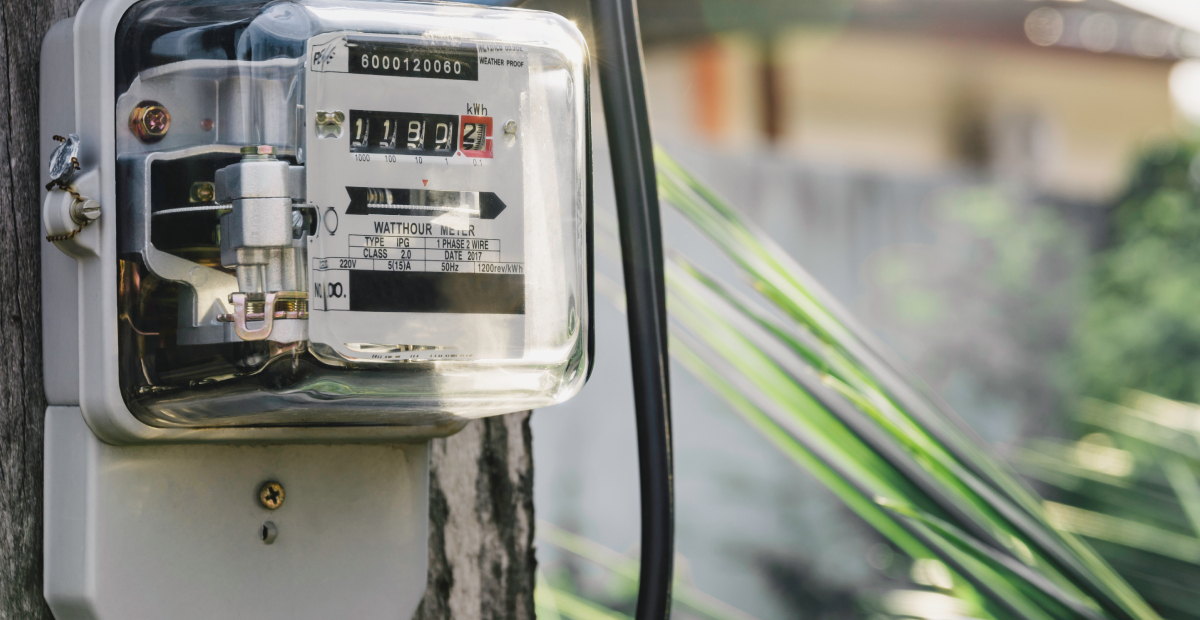
Solar rooftop systems are typically grid-connected. The solar power system produces more electricity than needed during daytime hours so the surplus energy enters the power grid. Users obtain electricity from the power grid during nighttime and periods of cloud cover. The bidirectional meters track these exchanges under net metering to maintain an equilibrium between energy consumption and production.

Billing Mechanism and Monthly Savings 

 Real Savings Through Export Credits

The net metering system requires consumers to pay only for the amount of energy they use after exporting excess energy back to the grid. Your electricity bill will be reduced when you consume 500 units while exporting 300 units because you will only need to pay for 200 units. The direct reduction of electricity bills enables you to recover your solar investment at a faster rate.

The Role of DISCOMs and State Policy 

 Why Location Matters

Each state has its own set of policies which differ from one another. Some states have implemented capacity restrictions and limited net metering to specific user groups. The policies in Gujarat and Maharashtra support solar adoption but regulatory restrictions in other states create barriers to growth. Before installing rooftop solar you need to understand the net metering rules that apply in your state.

Economic Modelling: With vs Without Net Metering 

Seeing the Payback Picture Clearly

A 5 kW solar system in India generates about 20–25 units (kWh) per day, which totals 600–750 units per month, depending on location and sunlight.

With net metering, the payback period for a 5 kW rooftop solar system in India is typically between 3 and 5 years, depending on electricity tariffs, state subsidies, and local solar potential.

The payback period extends to 7–8 years when net metering is not available because savings are restricted to personal electricity usage.

Planning Your Solar Power System Project 

 Size, Space, and Smart Design

The selection of system size requires knowledge about monthly energy consumption together with rooftop dimensions and existing shading conditions. The maximum export potential from oversizing systems exists but policy restrictions often set a limit at 80–100% of sanctioned load. The optimization of inverter size requires selection of efficient solar rooftop panels and consideration of seasonal generation drops.

The Future: Virtual Net Metering and P2P Trading 

 Expanding Access and Democratising Solar

Virtual net metering enables solar owners to generate credits from multiple locations including schools and housing societies that lack sufficient rooftop space for solar panels. The states of Uttar Pradesh and Delhi have started testing peer-to-peer (P2P) solar trading through blockchain platforms which enables prosumers to sell their surplus electricity to nearby consumers.

Maximising ROI for Small Businesses and Homes 

 Plan, Install, Save

The decreasing price of commercial solar energy makes solar power system projects highly appealing to small industries and schools and commercial shops. These systems provide short payback periods and long-term energy independence when combined with favorable net metering policies. Consumers should also explore central or state subsidies to further reduce capital investment.

FAQs

Through net metering consumers gain the ability to feed their excess solar power into the power grid which allows them to receive compensation for it. The reduction of billed units from the DISCOM results in substantial monthly electricity cost savings.

Most Indian states have established net metering policies but their implementation details regarding system size restrictions and credit duration and tariff modification rules vary. The states of Gujarat and Karnataka and Tamil Nadu maintain favorable conditions for their net metering frameworks.

The implementation of net metering enables rooftop solar system owners to achieve payback periods between 4 to 5 years based on electricity tariff rates and system capacity. The absence of net metering makes the payback period longer.

Yes. Rooftop solar systems in residential areas power lifts together with common lighting and water pumps. The society benefits from reduced monthly utility expenses through net metering because it allows them to receive solar energy credits.

Virtual net metering enables different buildings and consumers to share the benefits of a single solar installation. The implementation of virtual net metering exists through pilot programs in Delhi and Andhra Pradesh and Telangana.

You might also like
Diagram showing the assembly layers in pv panel construction
15th Jan, 2026
The scientific genesis of a solar power plant from the construction of a solar cell

Synopsis The worldwide energy transformation depends on tiny photovoltaic effects which take place inside individual semiconductor wafers. This article traces the transformative journey from the precise construction of a solar cell to its scalable manifestation as a utility-scale solar power plant. We delve into the meticulous manufacturing stages that define quality and longevity in pv […]

View More...
Diagram showing the growth metrics of a successful solar power plant business
8th Jan, 2026
Scaling the solar plant business through intellectual capital and strategic consulting

Synopsis A sustainable solar plant business needs to establish itself in 2026 through installation capacity and requires both technical knowledge and ethical business practices. The blog provides essential methods for building a profitable solar power plant business which depends on an experienced solar power consultant to handle market challenges. Our method which combines data with […]

View More...
Diagram illustrating the water lift capacity of a Surface Solar Pump from a canal
6th Jan, 2026
The strategic evolution of the solar water pump in sustainable rural infrastructure

Synopsis Even as India faces steady challenges in accessing water and managing uneven shifts in energy costs, turning to solar-powered pumps has become unavoidable for long-term survival of farm economies. Rather than rely on old-school machinery, switching to clean-energy systems offers a clearer path forward – one tied directly to ensuring both power and food […]

View More...