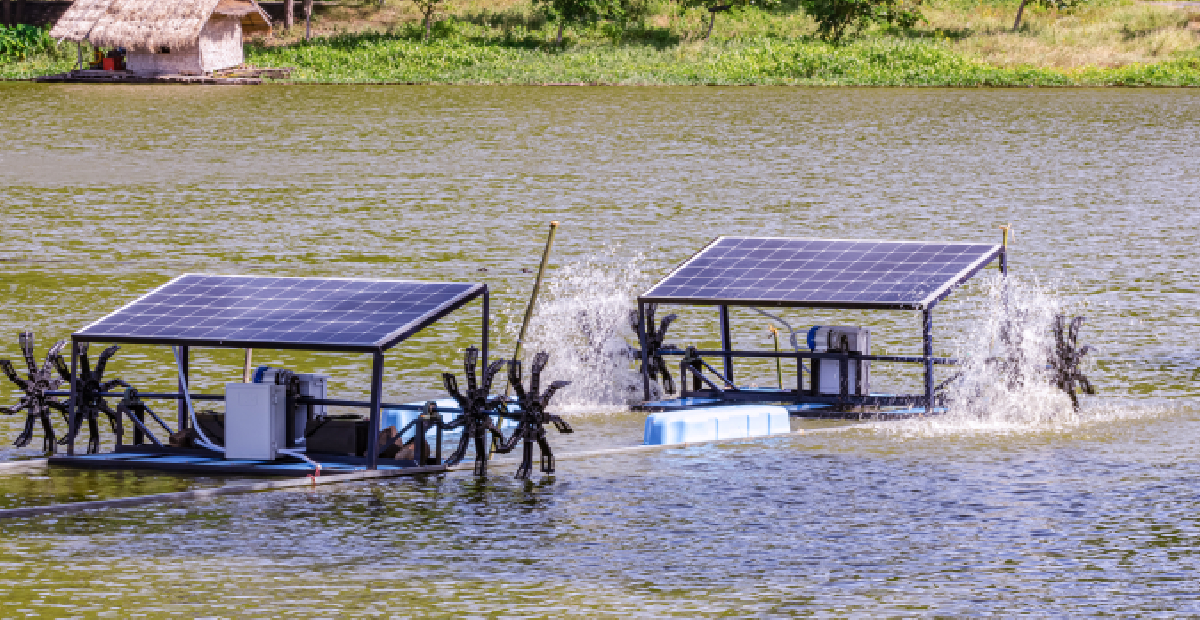
With the surge in demand for solar, the manufacturing costs have dropped to a great extent. This has led the experts to predict that soon, solar and other renewable energy sources will be a great way to shape the future of this world.
Over the last few years, solar energy has become a sought-after solution for sustainable and healthy living in most countries. The first step towards gaining energy independence is installing solar products like solar panels, solar batteries, etc., at home. This will allow you to generate your power instead of relying on external sources.
You will hardly have to pull any electricity from the grid if your solar panels meet your energy requirements. The result of a balance between the renewable energy that you produce and that you consume will lead to a net-zero energy bill.
Objectives
1. Reducing electricity interruptions and costs
2. Increase in energy independency
You will generate your power and export the excess to the grid, for which you will receive a credit. Apart from simple maintenance every three years, there is nothing to check or worry about.
Efficiency in production and use of electricity
3. Efficiency in production and use of electricity
4. Better ROI than bank deposits
Putting your savings in a bank gives you 7 to 8% returns. By investing in solar, you can increase that number by 20-30%(Commercial) at the very least by the end of 3 – 4years.
5. Solar Power Improves Grid Security
When many of us switch to solar power, we are less likely to experience blackouts or
brownouts. This, in turn, provides us with greater electricity grid security, especially in terms
of natural or human-caused disasters.
6. Utilization of unused spaces
Across countries, vast lands are far away from big cities or capitals and are not used for anything at all.
With solar power, we can actually use the land and subsequently generate great value; solar
energy provides a source of power for everyone. In this way, we don’t need to use high-priced
land that might be better suited for other applications.
7. Highly durable and easy to maintain
8. Saving More Money On Solar Energy
- Lower Electricity Bills:
A home solar energy converts power from the sun, possibly eliminating
monthly electric bills.
- Solar Rebate Programs
- Net Metering Programs:
A net metering program enables homeowners to sell excess solar electricity to
their local utility company and earn credits. Now, households can receive zero charge
or negative electricity bills monthly. Also, net metering removes the need to pay
battery storage for solar installation.
- Solar Feed-in Tariff
- Federal Tax Credit
9. Creating Jobs
Our national economy can be helped by solar power. The more people who opt for solar, the
more needs will be for companies to install solar panels. This creates additional jobs for
skilled workers and consequently keeps the economy growing.
Solar Futures Study
- With continued technological advances, electricity prices do not increase through 2035. Ninety-five percent decarbonization of the electric grid will be achieved in 2035 without increasing electricity prices because savings fully offset decarbonization and electrification costs from technological improvements and enhanced demand flexibility.
- Achieving decarbonization requires significant acceleration of clean energy deployment, employing as many as 500,000–1.5 million people in solar jobs by 2035.
- Storage, transmission expansion, and flexibility in load and generation are key to maintaining grid reliability and resilience. Storage capacity expands rapidly, to more than 1,600 GW in 2050. Small-scale solar, especially coupled with storage, can enhance resilience by allowing buildings or microgrids to power critical loads during grid outages.
The approach of other Nations
To understand what is driving this shift from traditional electricity to renewable energy, we have created a list of reasons that explain why solar is the future :
1. The US is reaching its peak in natural gas
Residential installations saw a 2% decrease in the second quarter of 2020 than the first due to the lockdown protocols. However, the sector bounced back by adding 19 gigawatts of total power by the end. The experts are also predicting that the US will be reaching its peak in natural gases very soon. This will leave room for the solar sector to fill the void and capture the market in the meantime.
2. Installations doubled in China
Despite Lockdown, the country’s demand for solar saw an exponential rise. With President Xi Jinping’s September announcement that by 2060, the government will zero out of carbon emissions, the country’s main solar industry expects a record surge.
3. Spain emerging as a strong contender
In Europe, there was a 60% increase in solar-generated electricity over 2019. A total of a 15,000 gigawatt-hour of power. Germany is usually the forerunner, but according to experts, Spain is expected to grow double the rate in the upcoming two years.
4. Demand in Europe
Due to the pandemic, the demand for traditional electricity sank, but demand for renewable
energy saw a huge surge. As a result, 40% of net electricity came from renewable sources in
the first half of 2020.
5. The UK goes coal-free
Since the Industrial Revolution, this was the first time Britain ceased producing coal- generated power. As a result, this marked Britain’s greenest year of all time. By 2025, Prime Minister Boris Johnson has pledged to eradicate polluting fuel entirely and by 2030 ban all new gas-powered cars.
6. Australia booming
The climate of Australia is a huge plus when thinking about solar power. The ample sun, along with clear skies throughout the year coupled with high power prices, has paved the way for more than 29% of house owners to shift to solar power and reap its benefits. The year has also seen record lows for power plants due to these reasons.