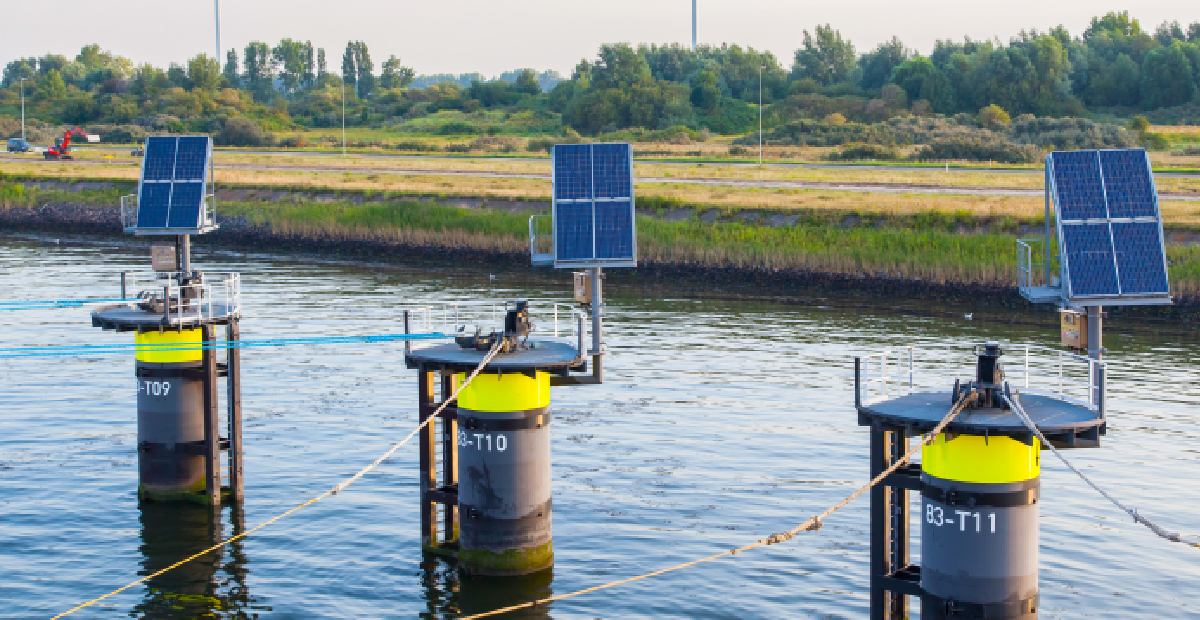
Floatovoltaics is a revolutionary way for installing solar photovoltaic systems over bodies of water. In this case, the PV systems are designed to float on the water body by employing various floats such as mooring, pontoon, and so on.
Comparison Among all Photovoltaic Systems
Quality of Floating Solar Panels
Benefits of Floatovoltaics
- Improved Energy Efficiency from the PV system: The efficiency of photovoltaic modules decreases as the temperature of the panel rises. Floating photovoltaic systems are equipped with a cooling system that makes use of the water in which they float as a natural heat sink. As a result, they are more efficient than comparable ground-based systems.
- Improve Water Quality: Photosynthesis allows organic matter, including algae, to grow where water bodies are exposed to the sun. These algae are generally undesirable because they can clog pumping and filtration systems, necessitating expensive chemical treatment to eliminate the problem. By shading the water, the installation of floating photovoltaic panels reduces photosynthesis.
- Reduction of Evaporation: On natural lakes and ponds, the floating solar panels can reduce water evaporation by up to 33%, and on man-made facilities by up to 50%.
- Reduction in Panel Soiling: The installation sees a reduction in soiling because the solar array is located on the water’s surface, away from sources of dust and dirt. The increased distance from the ground, especially in dry and dusty areas, means that dust and dirt are less easily trapped by the panel, reducing the need for surface cleaning.
- Less Civil Infrastructure Work: As floating systems do not require thousands of metal frames to be anchored to the ground, a panel array can be built faster.
Challenges in Floatovoltaics
- Increased Cost: The costs of engineering and construction are typically higher than those of a ground-mounted solar farm.
- Safety Issues: Because floating solar combine water and electricity, cable management and insulation testing must be given more thought than on land, especially when cables are in contact with water.
- Degradation and Corrosion: Moving parts in a floating solar plant are constantly subjected to friction and mechanical stress.
- System failures could be devastating if they are poorly built and maintained.
- Moisture can cause the installation to deteriorate and corrode, especially in more aggressive coastal environments.
- Understanding of Water-bed Topography: Developing floating solar projects necessitates a thorough understanding of the topography of the waterbed and its suitability for anchoring floats.
References
R. S. Spencer, J. Macknick, A. Aznar, A. Warren, and M. O. Reese, “Floating PV : Assessing the Technical Potential of Photovoltaic Systems on Man-Made Water Bodies in the Continental US. Floating PV : Assessing the Technical Potential of Photovoltaic Systems on Man-Made Water Bodies in the Continental US,” 2018.
N. M. Kumar, E. Engineering, P. Mallikarjun, and E. Engineering, “Floatovoltaics : Towards Improved Energy Efficiency, Land and Water,” vol. 9, no. 7, pp. 1089–1096, 2018.
https://www.recgroup.com/sites/default/files/documents/wp_-_floating_pv_rev_d_web.pdf
https://www.google.com/url?sa=D&q=https://iaeme.com/MasterAdmin/Journal_uploads/IJCIET/VOLUME_9_ISSUE_7/IJCIET_09_07_114.pdf&ust=1649403960000000&usg=AOvVaw1r6VNTjpA3F8neL9c7hSxJ&hl=en&source=gmail