Synopsis
The Solar Powered Pump represents a crucial national priority because India struggles with persistent water scarcity and unstable diesel prices which endanger its agricultural base. The research evaluates the strategic advantages of adopting solar-powered pumps instead of conventional systems because they provide constant and environmentally friendly water extraction. The analysis evaluates two main solar pump systems which include the Solar Submersible Pump for extracting water from deep aquifers and the Surface Solar Pump for extracting water from rivers and ponds . The success of rural development requires implementing these technologies through complete water management plans that create vital components for successful solar power irrigation system projects. The Solar Company in Kolkata provides specialized services through their deep understanding of local areas to create Solar Water Pumps that optimize performance based on specific terrain and hydrological characteristics.
Table of Contents
The Indian agricultural sector faces two enduring climate problems which demand both dependable water access and cost-effective energy solutions. The dual challenge demands farmers to establish independent clean energy systems because their current power needs exceed what traditional electricity from the grid and diesel generators can provide. The Solar Powered Pump serves as a fundamental infrastructure advancement which extends power access to areas outside of conventional grid boundaries. Solar power systems create enduring financial stability through fixed fuel costs which results in long-term operational reliability for farmers. The Solar Powered Pump has become a critical adaptation tool for climate change because it lets farmers sustain consistent irrigation practices which leads to enhanced crop yields and increased profits across India.
The new water-energy nexus in Indian agriculture
The success of farmers depends on dependable irrigation systems because they determine both agricultural output and economic performance. The current conventional irrigation systems produce worsening issues because diesel pumps create environmental contamination and produce greenhouse gases yet electric pumps fail to operate dependably in areas with limited power access. The Solar Water Pump system operates as a decentralized solution which integrates power generation with water distribution capabilities. The PM-KUSUM government program allows farmers to install solar-powered systems which require minimal ongoing costs after the installation phase. The strategic transition enables the agricultural sector to build climate adaptation capabilities which enhance its ability to withstand climate emergencies while securing improved national food security.
Understanding the Solar Powered Pump imperative
The Solar Powered Pump market functions through economic elements together with sustainable operational methods. The elimination of fuel and electricity costs results in substantial financial savings which enables businesses to recover their initial investment expenses at a fast pace. Solar Powered Pump systems produce no carbon emissions which helps minimize the global warming risks that conventional pumping systems generate. The pumps maintain high reliability which allows farmers to maintain their irrigation plans even when rural agricultural operations experience power outages. The Solar Powered Pump system generates immediate advantages for farmers by improving their standard of living and boosting their agricultural yields.
The technical divide: Solar Submersible Pump vs Surface Solar Pump
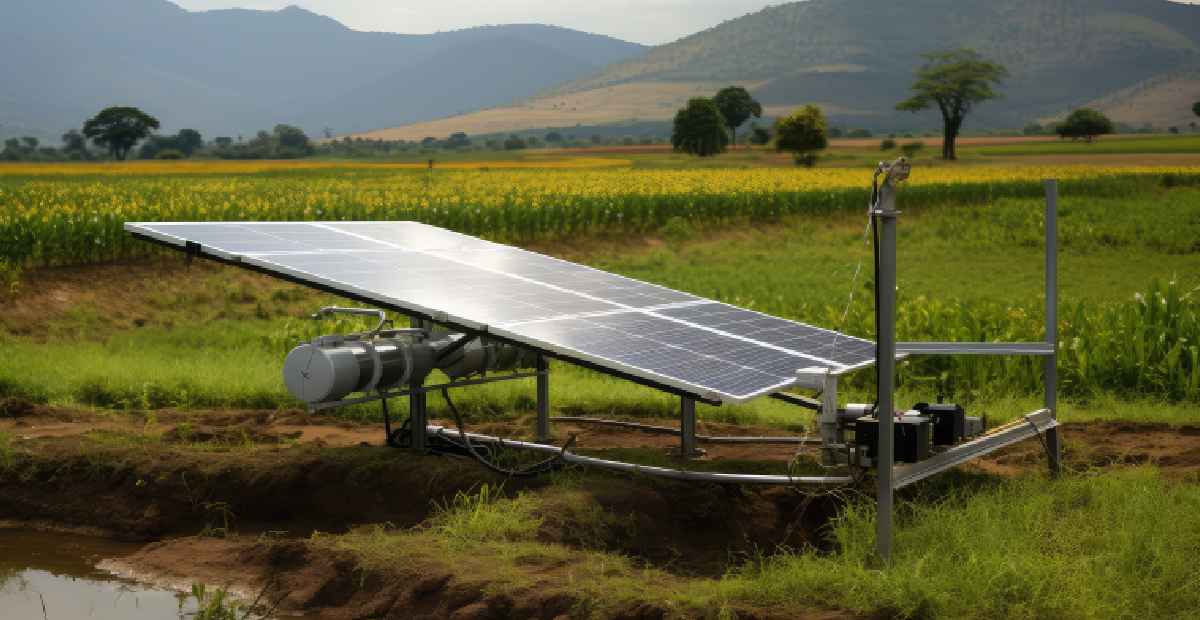
The correct pump technology selection for solar power irrigation system projects determines their long-term operational success and efficiency. The selection process depends on two main factors which are the depth of the water source and its classification . The Solar Submersible Pump functions as a fully underwater system which makes it the best solution for deep well and borehole water extraction. The Surface Solar Pump operates above ground level by using suction to draw water from sources that have water levels below eight meters such as rivers and canals and ponds. The Solar Submersible Pump systems need expensive initial costs and complicated maintenance procedures but the Surface Solar Pump offers easy maintenance access at the cost of limited operating depth.
Engineering success for the Solar Power irrigation system project
A successful solar power irrigation system needs thorough site assessment and precise engineering to connect solar power generation equipment with pumping devices and water delivery systems. The implementation of solar pumps with drip or sprinkler irrigation systems through best practices leads to water conservation and protects groundwater resources. The design process must ensure that pump capacity matches both crop water requirements and solar panel output to avoid unnecessary costs from oversized equipment and power interruptions . Solar power irrigation systems achieve their highest agricultural output and longest operational life through real-time monitoring systems which allow farmers to track water flow and system performance.
Economic and environmental dividends of the solar water pump
Solar Water Pump technology installed in extensive agricultural territories generates two-fold economic value and environmental advantages. The systems enable farmers to generate their own energy supply (prosumers) through grid energy sales when state policies allow it. The Solar Water Pump functions as a clean and noiseless power source which reduces agricultural carbon emissions because it replaces diesel systems. The reduction of fossil fuel consumption results in enhanced air quality throughout rural regions. The Solar Water Pump system provides complete advantages to small-scale and marginal farmers because it reduces their costs and generates additional income and protects the environment.
Operational excellence and the maintenance factor
The Solar Submersible Pump and Surface Solar Pump require active maintenance strategies to reach their extended operational lifespan. The Solar Submersible Pump requires high durability because it operates in unreachable areas yet the Surface Solar Pump requires frequent inspections because it operates in exposed conditions. The solar pump system operates with minimal moving parts which leads to lower maintenance needs compared to diesel motors. The system’s operational life expectancy depends on periodic solar panel cleaning to stop dust accumulation and planned inspections of the pump controller and wiring to maximize energy production.
The sunshell specialization: expertise beyond Calcutta
Our assessments and structural evaluations for each solar power irrigation system project to ensure Solar Water Pump installations operate safely and with local knowledge because we operate across multiple Indian states. The team at our company performs complete hydrological company bases its operations as a leading Solar Company in Kolkata on the belief that solar technology expertise must unite last long. Our organization uses world-class design standards (IEC and IS codes) and implements strict safety protocols because we prioritize the health of both the environment and its inhabitants over monetary profits. The selection of appropriate pump technologies between Solar Submersible Pumps for deep bore applications and Surface Solar Pumps for river lift operations depends on specific rural project needs according to our team of advanced professionals.
Localized insight from a global thinking solar company in kolkata
The specialized Solar Company in Kolkata proves its capabilities by implementing innovative engineering solutions to resolve complex water challenges across India. The Solar Powered Pump system operates dependably in challenging remote areas because it includes multi-layer AC/DC protection and remote monitoring capabilities. Sunshell Power assists clients through its energy consulting services and delivers superior post-operation maintenance assistance. Sunshell Power delivers complete services that guarantee reliable water supply from investments which create strong Indian food security through efficient agricultural solutions.
FAQs
Why is the adoption of the Solar Powered Pump considered a national imperative for agriculture ?
The Solar Powered Pump should become a standard tool because it addresses India’s three major problems of energy poverty and water scarcity and food security. The conventional diesel and electric pumps used in remote Indian areas fail to deliver reliable service because they are expensive to run thus creating ongoing agricultural productivity issues. The solar system operates without fuel costs while providing uninterrupted power during sunlight hours which safeguards farmer profits and minimizes their dependence on state electricity support. The Solar Powered Pump system reduces farming operations’ environmental impact through lower greenhouse gas emissions which enables the agricultural sector to meet national climate change reduction goals. The complete set of advantages from solar pumping technology makes it essential for building sustainable rural development.
What is the fundamental difference between a Solar Submersible Pump and a Surface Solar Pump application ?
The main difference between these pumps exists in their placement sites and their ability to work in various hydrological settings. The Solar Submersible Pump operates as a waterproof sealed system which performs underwater operations to extract water from deep underground sources including borewells. The Surface Solar Pump operates above water level by using suction to draw water from nearby water sources including rivers and ponds and shallow wells. The selection between a Solar Submersible Pump and a Surface Solar Pump for solar power irrigation system projects requires a professional hydrological assessment to determine water depth and flow rate needs.
What are the key planning stages for executing a successful solar power irrigation system project?
A solar power irrigation system project requires more than pump purchase because it needs detailed planning for success. The project begins with a full site assessment and hydrological investigation to confirm water availability and depth measurements before proceeding to system sizing that matches pump capacity to irrigation water requirements and solar panel energy output. The installation of solar pumps requires the implementation of efficient water application systems such as drip or sprinkler systems which follow best practices for water conservation. The project requires essential safety features and structural components that defend the installation from damage in diverse rural environments with harsh conditions.
What are the primary economic benefits delivered by the Solar Water Pump to farmers?
The Solar Water Pump generates its primary economic value through lower operational expenses and dependable revenue streams. Farmers achieve increased profitability because the Solar Water Pump eliminates their need to pay ongoing energy costs. The Solar Water Pump operates reliably to provide uninterrupted irrigation services which protects crops from power outages that cause yield losses while resulting in elevated total production amounts. The Solar Water Pump system allows farmers to become prosumers under supportive state policies because it enables them to produce surplus electricity which they can sell to the grid to boost rural economic growth.
How does proximity to a specialized Solar Company in Kolkata benefit a remote solar power irrigation system project?
A specialized Solar Company in Kolkata with extensive regional knowledge delivers premium design and execution services for remote solar power irrigation system projects. The regional core team possesses expertise from Eastern and Northeastern Indian terrains and local regulations which minimizes installation difficulties in challenging geographical areas. The company uses its expertise to pick between Solar Submersible Pump and Surface Solar Pump components while following all necessary safety guidelines. The reliable provider operates sophisticated remote monitoring systems which enable quick access to maintenance personnel for supporting long-term operation and high reliability of vital agricultural equipment.