When planning to implement solar power, you might have come across two key terms – net metering and gross metering. Understanding these terms is essential to managing and maximizing your solar power system’s energy production. We’ll break down these terms to make them easier to understand.
What is Net Metering?
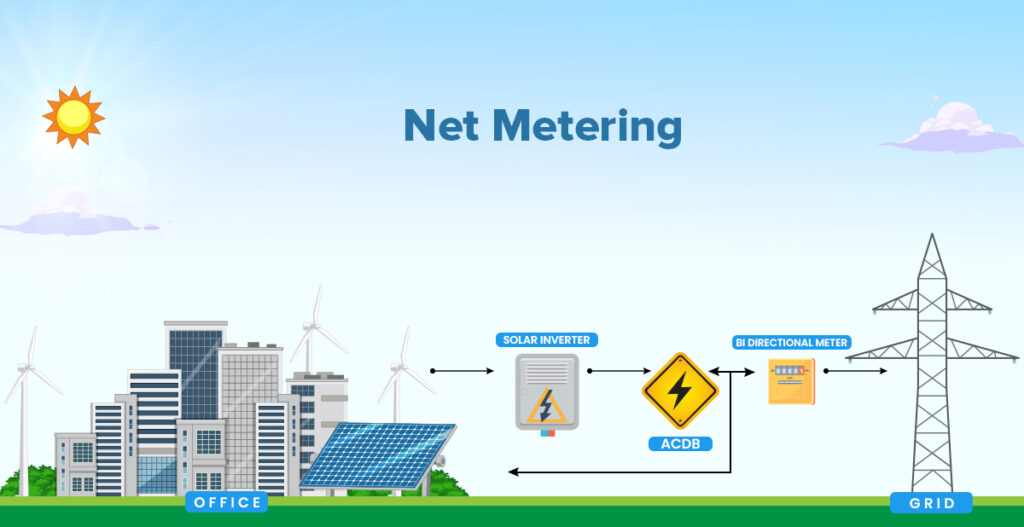
Through net metering, you can use the electricity your solar panels produce to offset the grid electricity you consume. Here’s how it works:
Generation and Consumption: In the daytime, your solar panels generate electricity. The excess electricity generated by your panels is returned to the grid if you don’t use it all.
Metering: Using your electricity meter, you can track how much power you’re exporting to the grid and what you’re using when you need more power (like at night).
Billing: You will be charged for the “net” amount of electricity you used at the end of the billing cycle. Essentially, they subtract what you send to the grid from what you take from it. Your bill might even be credited if you produced more than you used!
For Instance: Suppose your home consumes 500 kWh per month. In the same period, your solar panels generate 600 kWh. The excess electricity you sent back to the grid would be credited to your bill through net metering.
What is Gross Metering?
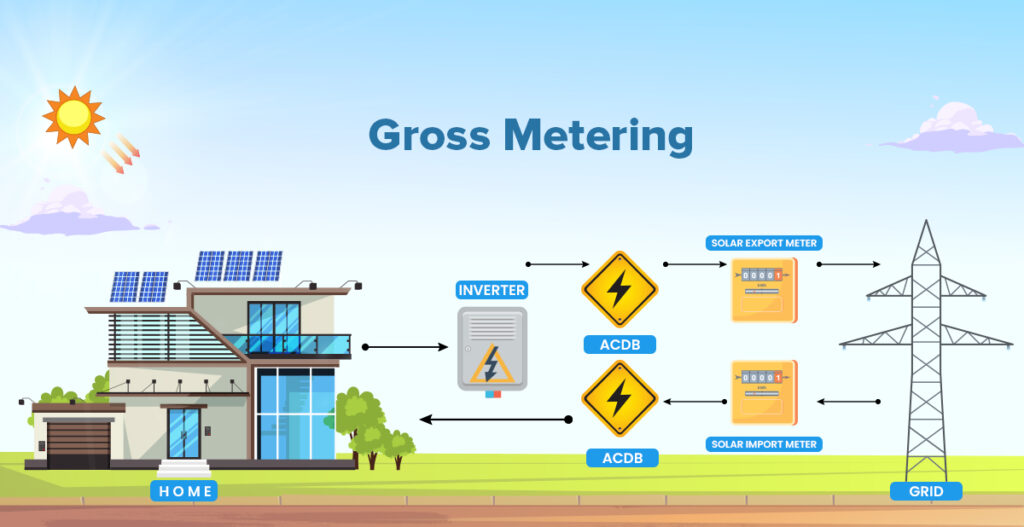
It’s a bit different with gross metering. Using this system:
Generation: Your solar panels directly feed the grid with the electricity they generate.
Consumption: As you did before you installed solar panels, you still draw electricity from the grid.
Metering: The electricity you generate and consume from the grid is tracked separately by your electricity meter.
Billing: A bill is sent for the amount of power you use from the grid, and you are paid for the amount you generate from your solar panels. You may pay a different rate than you receive.
For Instance: Suppose your solar panels generate 600 kWh in a month and you consume 500 kWh, then you will be paid by your utility company for the 600 kWh you generated. You will be billed separately for 500 kWh of electricity you used.
Which One is Better?
Your utility company’s rates, your local regulations, and your electricity consumption patterns determine whether you choose net metering or gross metering. A few points to consider are:
Local Regulations: Some regions favour one system over another. Consult your local utility company or energy regulator.
Electricity Rates: Be sure to compare the rate at which you will be paying for producing electricity with the rate at which you will be paying for consuming electricity. The net metering system is more beneficial if the selling and buying rates are similar.
Energy Usage Patterns: It might be more economical to use net metering if you spend much of your day at home while your panels are producing power.
Conclusion
It is vital to understand net metering and gross metering before installing solar panels. It depends on your particular circumstances and local policies which system will be best for you. Each has its advantages. Understanding how each system works will help you better plan your solar energy setup and maximize its benefits. Call us at SunShell Power and we’ll help you understand gross and net metering in simple terms, and make the best choice for you!
Synopsis For the CFO of 2026, understanding the commercial solar power plant balance sheet is no longer about sustainability alone—it is a critical requirement for fiduciary excellence. This blog conducts a detailed audit of the current solar energy plant cost versus 25-year projected returns, providing a data-driven roadmap for industrial investment. We break down the […]
Synopsis In the smart cities of 2026, public safety and energy efficiency are being redefined by advanced outdoor lighting solutions. This blog serves as a definitive guide to selecting the best solar street lights for modern municipal and commercial infrastructure. We explore the rapid transition from traditional grid-tied lamps to integrated solar street lights, which […]
Synopsis Empowering the agricultural heartlands of India in 2026 requires a transition toward decentralized, reliable energy solutions. This blog explores the transformative impact of a solar power system project specifically engineered for the modern farmer. We detail how a solar powered pump and a high-efficiency solar submersible pump can revolutionize irrigation by eliminating the dependency […]
Synopsis Shift from static to dynamic energy capture with a solar tracking system project, a cornerstone of high-performance energy architecture in 2026. This technical blog analyzes how sun tracking solar technology effectively reduces the cost of commercial solar energy by up to 25% by maximizing the angle of incidence throughout the day. We explore the […]