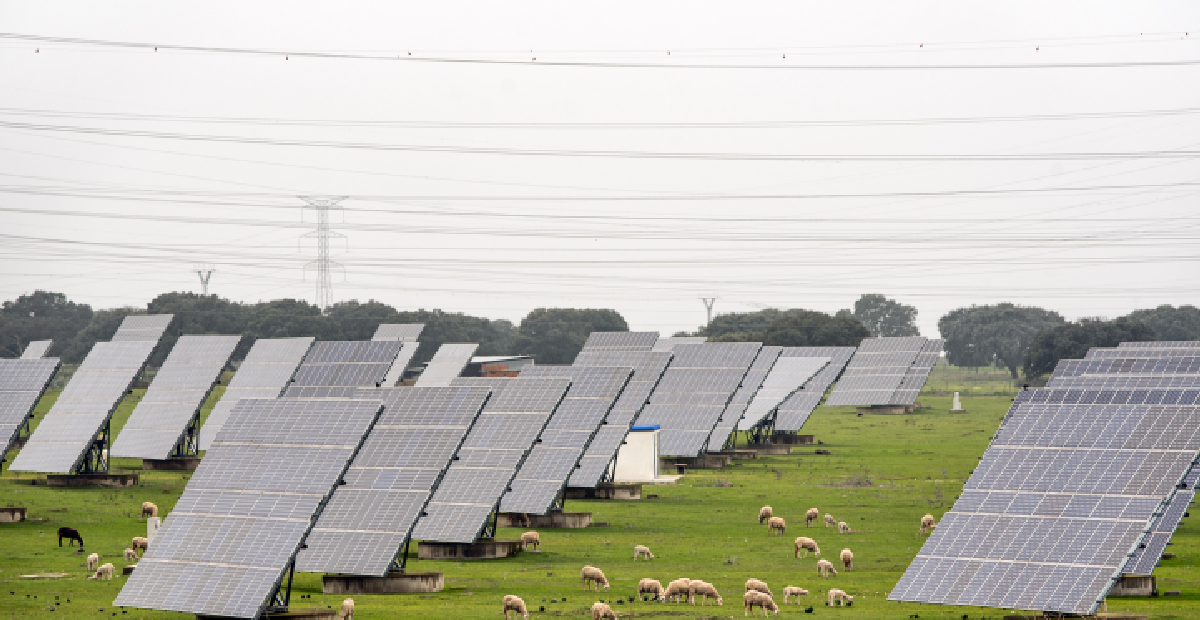

Diagram of an on grid home solar system showing net metering flow

Residential sovereignty and turning homes into net-zero power stations

13th Feb, 2026
Categories: BlogResidential Solar Power Plant

Synopsis

The homes of 2026 demonstrate how residential buildings evolved from their original purpose as protective structures into operational facilities which produce their own electricity without using any net energy resources. The blog examines how residential energy independence has become possible through the use of a home-based high-performance solar power system which protects families from increasing utility costs. We analyze the technical and financial architecture of the on grid home solar system, explaining how net metering turns your rooftop into a revenue-generating asset. By examining the current cost of solar power plant for home alongside the enhanced 2026 government subsidies, we demonstrate how solar has become the most bankable investment for the modern household. We delve into the critical differences between grid-tied and the off grid solar system for home, providing a roadmap for families seeking total independence from external power failures. The article shows that home-based solar energy systems with hybrid storage capabilities now provide uninterrupted clean power throughout the entire day. The article shows how residential solar power has become an essential requirement which offers financial security and environmental protection. Sunshell Power enables homeowners to control their energy consumption through its combination of Solar Products with smart home systems which will create sustainable financial benefits throughout multiple generations.

The rise of the prosumer: Why homes are the new power plants

The way homeowners interact with their utility providers has undergone a complete change during 2026. The basic energy requirements of households led to increasing utility costs and unanticipated electricity interruptions because they depended on one power grid which operated at different times throughout the day. The development of high-efficiency rooftop technology enables people to become prosumers who generate their own clean energy while using it for their personal needs. The installation of a solar power plant for home represents the essential move which will establish residential sovereignty in this new era. Your roof space enables you to create an independent power generation system which operates without noise to decrease your environmental impact while protecting your household budget from energy price fluctuations. The company made a strategic decision which will lead to achieving total financial autonomy.

On grid home solar system: The economics of net metering

For the majority of urban residents, the on grid home solar system is the most effective gateway to energy savings. The systems maintain their connection to the local power grid through net metering which enables electricity to move between the system and the grid. Your home receives power from your panels throughout the day while any excess energy gets sent back to the power grid. The utility company then provides credits on your bill for this exported power, which you can use to offset the electricity you draw at night. Your on grid home solar system achieves its highest financial value because it uses the utility grid as a virtual battery system. The system lets users reduce their monthly costs by 90% while building up national clean energy storage reserves.

Navigating the 2026 cost of solar power plant for home

A common concern for many families is the initial cost of solar power plant for home, but the financial landscape has never been more favorable. The price-per-watt of solar cells decreased through 2026 because of N-type TOPCon and Mono PERC cell technological progress which simultaneously boosted their energy output. The cost of a solar power plant for home depends on system capacity which usually ranges from 3kW to 10kW for typical residential needs. The internal rate of return (IRR) from solar power investments exceeds all other savings options when considering long-term returns. The system operates using free sunlight as its power source because its high-grade panels come with a 25-year warranty and require only periodic maintenance. The current investment in solar power allows homeowners to pay reduced electricity costs which will benefit them throughout the following thirty years thus becoming an essential element for building solid family financial stability.

Off grid solar system for home: Achieving total energy independence

The off grid solar system for home functions as the final solution which provides complete independence from the utility grid when grid power becomes unreliable or when homeowners want to maintain complete control over their energy supply. The systems operate independently from public power grids because they use lithium or lead-acid battery banks to store electricity which users can access at night or during periods of low sunlight. An off grid solar system for home requires expert load-profiling to ensure that the generation and storage capacity can handle the specific demands of the household without interruption. While the initial investment is higher due to the battery component, the benefit is total immunity from grid blackouts and rising electricity prices. The modern energy-sovereign family uses this system to create an independent lifestyle which makes their home an autonomous power and comfort sanctuary.

Maximizing ROI with a high-performance solar power plant for home

A solar power plant for home needs to follow engineering integrity principles at all times for achieving maximum investment returns. Researchers need to study beyond physical equipment because they must understand how the site’s physical characteristics including shadow mapping and solar irradiance optimization through tilt angle selection affect the system. A high-performance solar power plant for home uses premium-grade inverters and heavy-duty mounting structures that can withstand extreme weather for 25 years. The selection of high-yield components enables the system to produce its highest possible electricity output per square foot which leads to a shorter time until the system starts generating profits. The majority of well-designed residential systems operating in India will reach their complete cost recovery point during a period spanning three to five years. Your family will receive direct additions to their net wealth through each unit production which will generate free energy for almost twenty years after this time.

Government subsidies and the solar energy plant for home roadmap

The government’s commitment to residential solar has reached an all-time high in 2026 through schemes like the PM Surya Ghar: Muft Bijli Yojana. The central government offers home solar energy plant owners financial support which enables them to pay most of their installation expenses. The government provides subsidies that reach up to ₹30,000 per kW for systems which have a power capacity of 2kW or less. The subsidy for systems above 3kW reaches its maximum at ₹78,000. The incentives function to enable middle-class homeowners to adopt solar energy plants which will transform solar power into a typical household service. Your roadmap requires the application portal and vendor selection process to gain access to all national initiative benefits which will minimize your net investment costs.

Sunshell Power: Engineering your residential energy fortress

At Sunshell Power, we believe that your home deserves the same level of engineering rigor as a large-scale industrial plant. We specialize in deploying the highest-quality on grid home solar system and hybrid solutions that are built to last a lifetime. The process includes Solar Product selection and net metering and subsidy documentation management which our team of expert consultants guides you through each stage. We pride ourselves on using only Tier-1 components and adhering to the strictest IEC and IS safety standards for every solar power plant for home we install. Our mission extends beyond panel delivery because we offer an “energy fortress” which protects your family from harm while maintaining their safety and comfort and financial stability. The predictive maintenance system along with dedicated after-sales support from us enables you to reach net-zero lifestyle transition through a secure and highly profitable process.

Conclusion: Your journey to a net-zero future starts today

Your home needs a net-zero power station installation as its main improvement for 2026. By choosing a high-performance solar energy plant for home, you are taking command of your energy destiny and securing a clean future for your children. The installation of home solar systems between on grid and off grid systems provides you with instant advantages which you can easily observe. Sunshell Power stands ready to join forces with you for this transition by delivering engineering solutions and superior Solar Products which will help you reach complete energy independence. Our team will help you convert your rooftop area into your most important financial and environmental asset. You should start your green revolution journey at home to achieve the benefit of obtaining free power which operates independently.

FAQs

The cost of solar power plant for home in 2026 is highly competitive, typically ranging from ₹1.5 lakh to ₹3.5 lakh for standard residential capacities (3kW to 5kW) before government subsidies. The system cost includes high-efficiency PV panels together with a certified inverter and mounting structure and professional installation services. However, when you apply for the PM Surya Ghar subsidy, the effective cost of solar power plant for home can drop by nearly 40-60%, making the net investment as low as ₹1 lakh to ₹2.2 lakh depending on the state. Premium N-type or bifacial panels which cost more at first will generate additional energy which reduces the time needed to recover your investment. A site audit with customized results should be your first choice to determine the specific funding needed for your roof based on its specific measurements.

An on grid home solar system reduces your bills by allowing you to generate your own electricity during the day and “storing” any excess units in the utility grid via net metering. Every unit of electricity your solar power plant for home exports to the grid is credited to your account at the same or similar rate as the electricity you import at night. Your electricity bill will become zero for all units except a small fixed grid charge when you produce 10 units and consume 10 units. This mechanism effectively treats the utility grid as a massive, cost-free battery, maximizing the value of every photon captured by your on grid home solar system. The system implementation results in most families achieving 80% to 90% reduction of their monthly utility expenses.

While an off grid solar system for home can be installed anywhere, it is generally recommended for areas with frequent power outages or where grid connectivity is entirely unavailable. In a stable urban environment, an on grid home solar system is usually more fiscally prudent because it avoids the high recurring costs of battery replacement. However, many urban homeowners are now opting for “Hybrid” systems, which offer the benefits of the grid connection with a small battery backup for essential loads. If you desire total independence from the utility company, an off grid solar system for home is the only way to ensure your home remains powered regardless of external grid failures. The choice depends on your specific goals for energy sovereignty and your budget for storage hardware.

A modern solar energy plant for home is designed for extreme durability and requires very little manual maintenance over its 25-year lifespan. The main responsibility involves scheduled solar panel maintenance which should occur every two weeks to stop dust and bird excrement from obstructing sunlight because this situation can cause system efficiency to decrease by 10-15%. Professional installers choose high-quality Solar Products which include remote monitoring applications that let users track system performance using their smartphones to detect system issues right away. The system brain which is the inverter requires placement in a ventilated space for operation while periodic checks should be performed to detect any error codes. A solar power plant for home requires basic operational steps to function as an independent system which generates clean energy through automated processes.

To apply for the subsidy on your solar power plant for home, you must register on the national PM Surya Ghar portal using your electricity consumer number and mobile details. Once registered, you will need to apply for technical feasibility from your local DISCOM (Distribution Company). After receiving approval, you must select an empanelled vendor to install your solar energy plant for home using ALMM-approved domestic solar modules. Following the installation and the mounting of a net meter by the DISCOM, an inspection report is generated on the portal. The commissioning certificate triggers a 30-day process which results in a direct bank account transfer of the subsidy. Sunshell Power provides you with professional handling of all necessary steps through their experienced firm which will create a smooth transition to Solar Products.

You might also like
Close-up of a high-efficiency commercial rooftop solar installation on a textile mill
30th Apr, 2026
Fiduciary excellence analysing commercial solar power plant ROI and solar energy plant cost

Synopsis For the CFO of 2026, understanding the commercial solar power plant balance sheet is no longer about sustainability alone—it is a critical requirement for fiduciary excellence. This blog conducts a detailed audit of the current solar energy plant cost versus 25-year projected returns, providing a data-driven roadmap for industrial investment. We break down the […]
View More...
A row of integrated solar street lights illuminating a modern urban pathway
20th Apr, 2026
Urban illumination choosing the best solar street lights for integrated solar street lights infrastructure

Synopsis In the smart cities of 2026, public safety and energy efficiency are being redefined by advanced outdoor lighting solutions. This blog serves as a definitive guide to selecting the best solar street lights for modern municipal and commercial infrastructure. We explore the rapid transition from traditional grid-tied lamps to integrated solar street lights, which […]

View More...
A solar powered pump delivering water to an agricultural field in rural India
16th Apr, 2026
Rural resilience a solar power system project for solar powered pump irrigation

Synopsis Empowering the agricultural heartlands of India in 2026 requires a transition toward decentralized, reliable energy solutions. This blog explores the transformative impact of a solar power system project specifically engineered for the modern farmer. We detail how a solar powered pump and a high-efficiency solar submersible pump can revolutionize irrigation by eliminating the dependency […]

View More...
A row of industrial solar panels on a single-axis solar tracking system
13th Apr, 2026
Precision engineering implementing a solar tracking system project to lower cost of commercial solar energy

Synopsis Shift from static to dynamic energy capture with a solar tracking system project, a cornerstone of high-performance energy architecture in 2026. This technical blog analyzes how sun tracking solar technology effectively reduces the cost of commercial solar energy by up to 25% by maximizing the angle of incidence throughout the day. We explore the […]

View More...